
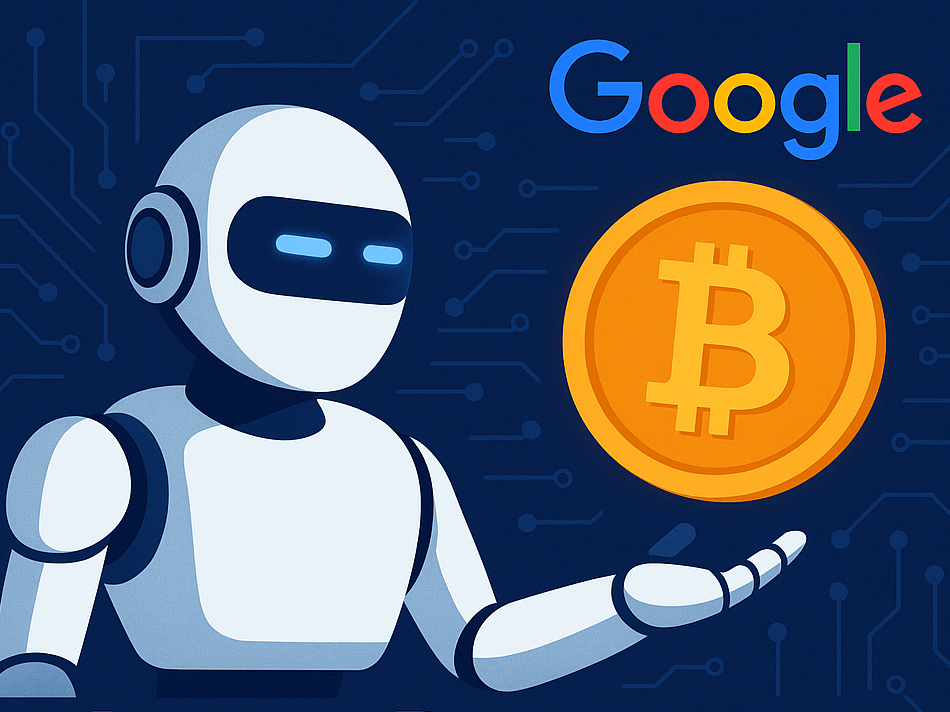
When AI gets a Wallet:
Google's AP2 could rewrite Money
By Kavisha Gounden
2 October 2025
Every so often, a quiet tech announcement hints at something seismic. Last week, Google unveiled its Agent Payments Protocol (AP2): a way for AI agents to move money on their own. At first, it sounded like just another developer tool. But if you zoom out, this is big.
Why? Because AP2 doesn’t just plug into banks and cards - it’s being built to work with crypto rails, including stablecoins. That means Google is preparing for a world where machines transact for us, and some of those transactions won’t run on Visa or SWIFT. They’ll happen on-chain.
If you’ve been waiting for crypto’s “real-world use case,” this might be it.
What AP2 Could Change
Picture your AI assistant, maybe a personal finance bot or a fleet of IoT devices, paying cloud providers, tipping content creators, or buying small bits of data without you clicking anything. That’s the future AP2 is chasing.
The protocol is built to:
- Let AI systems pay autonomously (subscriptions, API calls, microtransactions).
- Move value over multiple rails - from dollars in a bank to USDC or PYUSD on-chain.
- Keep regulators calm by baking in compliance and anti-fraud checks.
It’s an elegant bridge: the intelligence of AI with the borderless money of crypto.
Why This Matters to Crypto
For years, the crypto industry promised programmable money, but adoption mostly stayed in trading and DeFi circles. AP2 might change that overnight.
- Stablecoins get their killer use case: billions of tiny, automated payments that don’t make sense on card networks.
- Layer 2 and cross-chain projects become critical: those transactions need to be cheap and fast.
- Security becomes existential: if bots are paying, smart contracts and keys must be bulletproof.
It’s also a competitive shot across the bow for traditional payments. Visa and Mastercard aren’t going away, but this is the first credible push to make crypto rails invisible and mainstream.
What Investors Should Be Thinking
Institutional:
Big money has been circling stablecoins for a while. This is a new reason to lean in. USDC, PYUSD, and bank-issued tokens could see real demand if AI adoption explodes. The infrastructure behind them — custody, compliance, fraud prevention — looks like tomorrow’s picks-and-shovels trade.
Professional Funds / Crypto Natives:
Watch for protocols that could become the “plumbing” of AP2:
- Identity & reputation for autonomous agents.
- Scalable payments networks (Layer 2, modular chains).
- Compliance APIs that let regulated players integrate safely.
Retail:
If Google bakes this into its ecosystem, crypto might finally feel invisible and usable. You could hold stablecoins and spend them without caring about chains or gas fees — just like using a debit card.
The Bigger Picture - Beyond Crypto
This isn’t only about speculation. If machines can pay machines, we could see:
- Frictionless micro-commerce: AI tools buying and selling information in real time.
- Faster global liquidity: money flowing across borders without clunky bank rails.
- Pressure on regulators: especially to nail down stablecoin safety and consumer protections.
It’s also going to reignite privacy and control debates. Do you want your AI assistant to have a wallet? Who audits it? Who stops it from overspending or being hacked? Those are brand-new questions the world hasn’t answered yet.
The Takeaway
Google’s AP2 could turn crypto from a niche trading asset into real financial infrastructure. It’s not about meme coins or speculation; it’s about plumbing - making sure the next wave of AI can transact instantly, safely, and globally.
For the industry, it’s validation. For investors, it’s opportunity, but also a nudge to look deeper than token prices. The value might live in the rails and security layers rather than the coins themselves.
And for everyone else? The next time you ask your AI assistant to “handle it,” don’t be surprised if it does, and maybe it’ll use crypto to pay the bill.